Guide
Clear answers on workplace health, funding & tax
Practical answers to the questions HR and workplace-health leads in companies of every size really ask — fact-based and linked to the right measures.
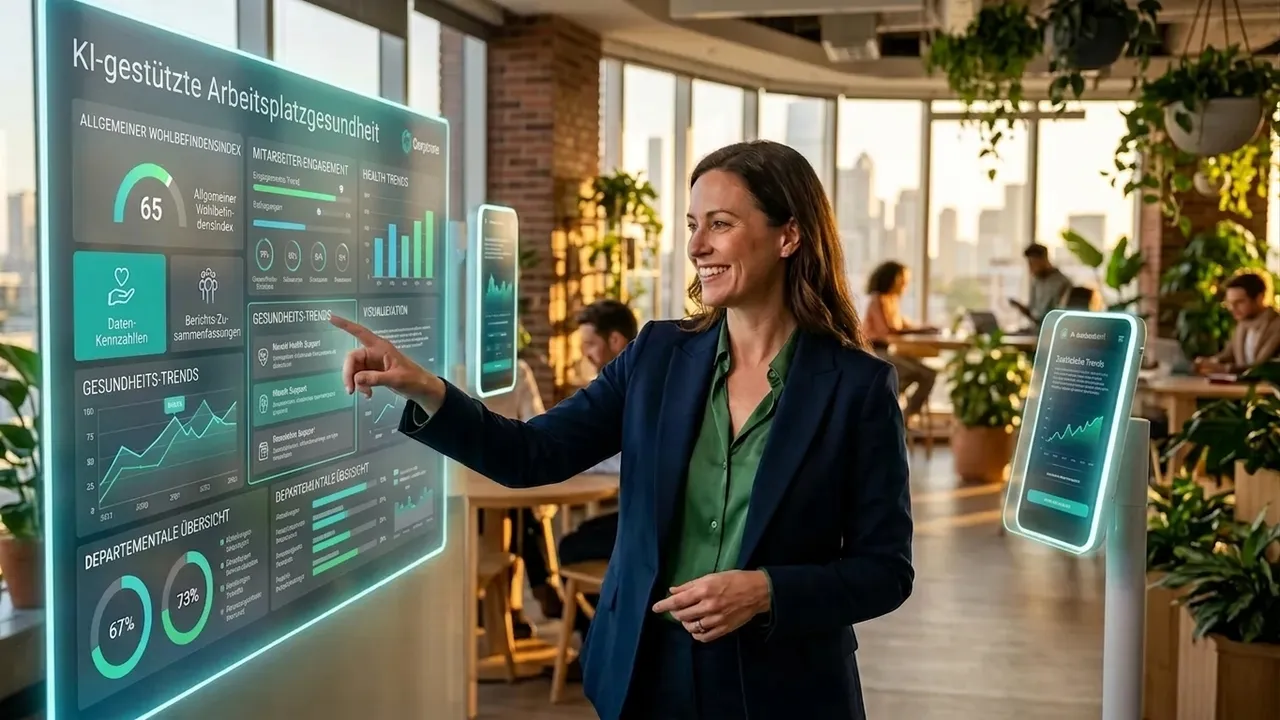
Agentic BGFWhat Is Agentic BGF — And Why Does Nina Plan Your BGF Measures Better Than a Spreadsheet?Agentic BGF describes workplace health promotion (BGF) systems that plan proactively instead of waiting — Nina analyzes participation, spots leftover budget, and suggests measures before HR has to ask.
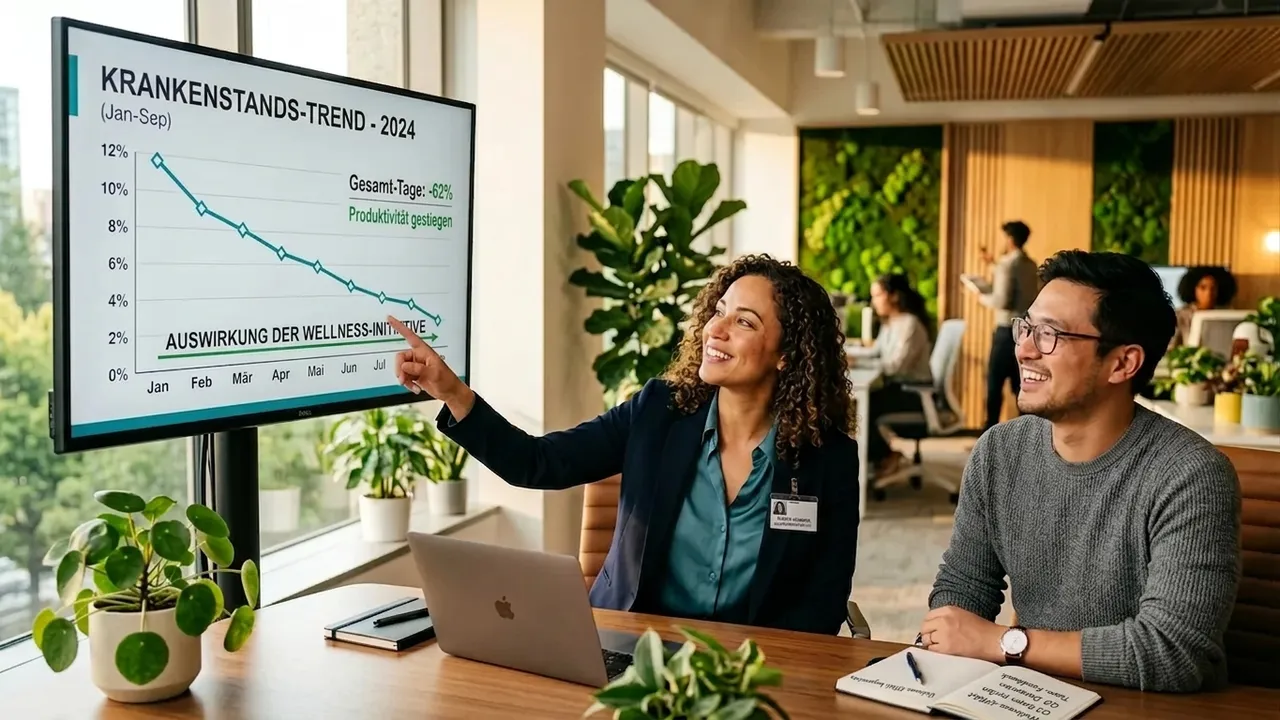
Reduce Sick LeaveHigh sick leave in the company — what really helps?Structured BGF measurably reduces absenteeism — according to the iga.Report, it pays off with a median ROI of around 1:2.7. The three main levers: physical activity (subsidized by German statutory health insurers), healthy leadership, and reducing psychological strain. Which measures really work.

ROI: Is BGM Worth It?Is BGM Worth It for Small and Medium-Sized Enterprises?BGM pays for itself faster at SMEs than at large corporations — according to the iga.Report, a median ROI of around 1:2.7 with structured implementation. Concrete numbers: What does a sick day really cost? And what does the tax allowance under Section 3 No. 34 EStG (German law) do — and what doesn't it do?

Starting BGM: First StepsHow do I start BGM — without an in-house HR department?Start BGM systematically in 3 steps: assess your maturity level (3 min.), launch a ZPP-certified program (tax-free under Section 3 No. 34 EStG, German law), and measure impact after one quarter. BGF-Kompass guides you through all three steps.

Affordable WHP for SMBsWhat can I do to make my employees healthier without a big budget?Free workplace health promotion (WHP) measures for companies: movement breaks, health champions, health insurer subsidies for certified courses (Section 20 SGB V), project funding in the workplace (Section 20b SGB V) and the tax-free allowance under Section 3 No. 34 EStG (German law) — concrete steps with no budget of your own.

Effective BGF Measures (Evidence)Which BGF measures have proven effects on employees' health and motivation?Evidence-based BGF measures with proven effects on absenteeism, motivation, and health: exercise, stress management, nutrition — concrete effect sizes from RKI, Chapman, iga.Report 40.

Legal BGF RequirementsWhat do I need to legally observe for BGF — what's mandatory, what's voluntary?What's mandatory, what's voluntary? Section 3 ArbSchG (risk assessment for psychological and physical hazards) is mandatory for every employer in Germany. BGF itself is voluntary — funding from a statutory health insurer under Section 20b SGB V requires a structured process, and there is no entitlement.

BGM Effort for SMEsHow much time and organizational effort does it take to introduce workplace health promotion (BGF) measures?A concrete timeline for building BGF at your SME: 4–8 hours setup, then 1–2 hours per month. Includes a phase plan and effort overview — no full-time HR required.

Find a Partner Health FundHow do I get a health insurance fund as a BGM partner?Health fund declined your BGM partnership? Formal GKV cooperation agreements are usually reserved for companies with 50–100+ employees. But under German law, Section 20b SGB V obligates the funds to support workplace health promotion — a documented BGM process qualifies you for a conversation with your fund on equal footing.

Health Insurance Funding & TaxDoes health insurance cover workplace health promotion (BGF) measures — and how do you access it?What statutory health insurers fund under Section 20b SGB V (projects, no entitlement) and, separately, what stays tax-free up to €600/year under Section 3 No. 34 EStG — plus the €50 benefit-in-kind under Section 8 EStG, requirements, and a step-by-step guide (German law).

Measuring BGF ImpactIs BGF really worth it — and how do I measure it?How to measure whether workplace health promotion (BGF) works: capture a baseline, compare the same metrics over 12 months, combine multiple indicators (sick leave, presenteeism, turnover), and use validated instruments — WHO-5, Work Ability Index (WAI), and COPSOQ.

Boost participation rateWhy is nobody using my workplace health promotion (BGF) offers — and what actually helps?Classic workplace health promotion (BGF) usually reaches only the already-active 20–25%. Here's how to raise the participation rate: low-threshold daily routines and location-independent, gamified team and charity challenges that also engage shift workers and inactive employees.